
Long Range LiDAR
Applications of Long Range LiDAR
Long Range LiDAR is especially effective for applications that require extended detection distance, precise 3D perception, and reliable awareness in high-speed or large-scale environments.
Autonomous Driving
Long Range LiDAR helps autonomous vehicles detect cars, pedestrians, lane features, and obstacles at extended distances for safer high-speed navigation.
Highway & High-Speed Mobility
Extended detection range gives vehicles more time to identify hazards, track movement, and support decision-making in highway and high-speed driving environments.
Intelligent Transportation Systems
Long Range LiDAR supports roadside traffic monitoring, vehicle classification, pedestrian detection, and real-time visibility across intersections and transportation corridors.
Rail Transit
Long Range LiDAR can help rail systems detect objects, monitor track areas, and improve situational awareness across stations, crossings, and transit corridors.
Industrial Automation
Long Range LiDAR supports object detection, area monitoring, and equipment awareness in large industrial spaces, warehouses, ports, and automated production environments.
Infrastructure Monitoring
Long Range LiDAR helps monitor bridges, tunnels, roadways, rail systems, and other infrastructure by capturing precise 3D data over extended distances.
Our Featured Solid State LiDAR Product
The Hummingbird D1 brings Solid State LiDAR into a compact, high-performance sensor designed for reliable near-field perception. Built on a fully solid-state electronic scanning architecture, it eliminates mechanical wear while supporting consistent performance for autonomous driving, robotics, and industrial applications. With its small form factor and wide field of view, Hummingbird D1 is ideal for systems that require durable, precise 3D sensing in space-constrained environments.
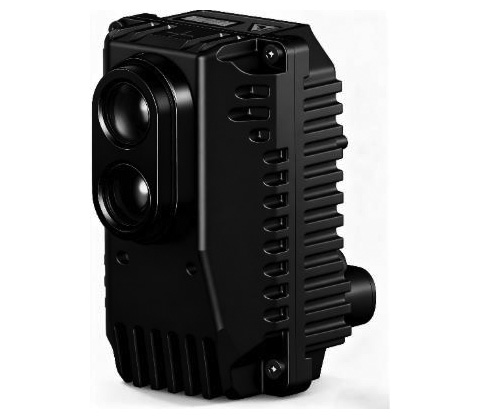
Hummingbird D1
Our Featured Solid State LiDAR Product
The Hummingbird D1 brings Solid State LiDAR into a compact, high-performance sensor designed for reliable near-field perception. Built on a fully solid-state electronic scanning architecture, it eliminates mechanical wear while supporting consistent performance for autonomous driving, robotics, and industrial applications. With its small form factor and wide field of view, Hummingbird D1 is ideal for systems that require durable, precise 3D sensing in space-constrained environments.
Hummingbird D1
Solid State LiDAR vs Mechanical LiDAR vs Directional LiDAR: When to Use Each
Solid State LiDAR FAQs
How does Solid State LiDAR work?
Solid State LiDAR works by sending laser light into an environment and measuring the reflected signals to create accurate 3D perception data. Instead of relying on large rotating mechanical parts, Solid State LiDAR may use MEMS mirrors, optical phased arrays, flash illumination, or other compact scanning technologies to detect objects, measure distance, and support real-time navigation.
What is the difference between Solid State LiDAR vs Mechanical LiDAR vs Directional LiDAR?
Solid State LiDAR refers to LiDAR technology that uses compact electronic, optical, or semiconductor-based methods to scan or project laser light with fewer moving parts. Mechanical LiDAR typically uses rotating components to capture a wide or 360-degree field of view. Directional LiDAR refers to LiDAR used for more focused, targeted sensing instead of full-environment awareness. In simple terms, Solid State LiDAR describes how the sensor is built, mechanical LiDAR describes a rotating scanning design, and directional LiDAR describes how the sensor is aimed or applied.
What are the benefits of Solid State LiDAR?
The main benefits of Solid State LiDAR include compact size, improved reliability, lower maintenance, and easier integration into high-volume systems. Because Solid State LiDAR reduces or eliminates bulky rotating parts, it is well suited for autonomous vehicles, robotics, industrial automation, smart infrastructure, and other applications that require durable 3D sensing technology.
Where is Solid State LiDAR used?
Solid State LiDAR is used in autonomous vehicles, robotics, AMRs, AGVs, smart transportation systems, rail transit, drones, industrial equipment, and security applications. It is especially valuable in environments where machines need precise 3D perception for navigation, obstacle detection, object recognition, mapping, and safety monitoring.
What are the main types of Solid State LiDAR?
The main types of Solid State LiDAR include MEMS LiDAR, optical phased array LiDAR, and flash LiDAR. MEMS LiDAR uses tiny mirrors to direct laser beams, optical phased array LiDAR steers light electronically, and flash LiDAR illuminates a wider area at once. Each type is designed to provide compact, reliable 3D sensing while reducing the need for traditional mechanical scanning components.

Ready To Learn More About Our LiDAR Sensors And Solutions?
At Seyond, we’re pushing the boundaries of LiDAR technology to shape a smarter, safer, and more connected future. Discover how our cutting-edge systems are revolutionizing industries and explore how we can help you achieve your vision.